

TRINITY ROAD, OLD MARKET, BRISTOL
Artist: Dorcas Casey
Client: The Guinness Partnership
Bronze casting: Castle Fine Arts Foundry
Date: 2026
Artist Dorcas Casey is making a new public sculpture for Trinity Road in Bristol’s Old Market.
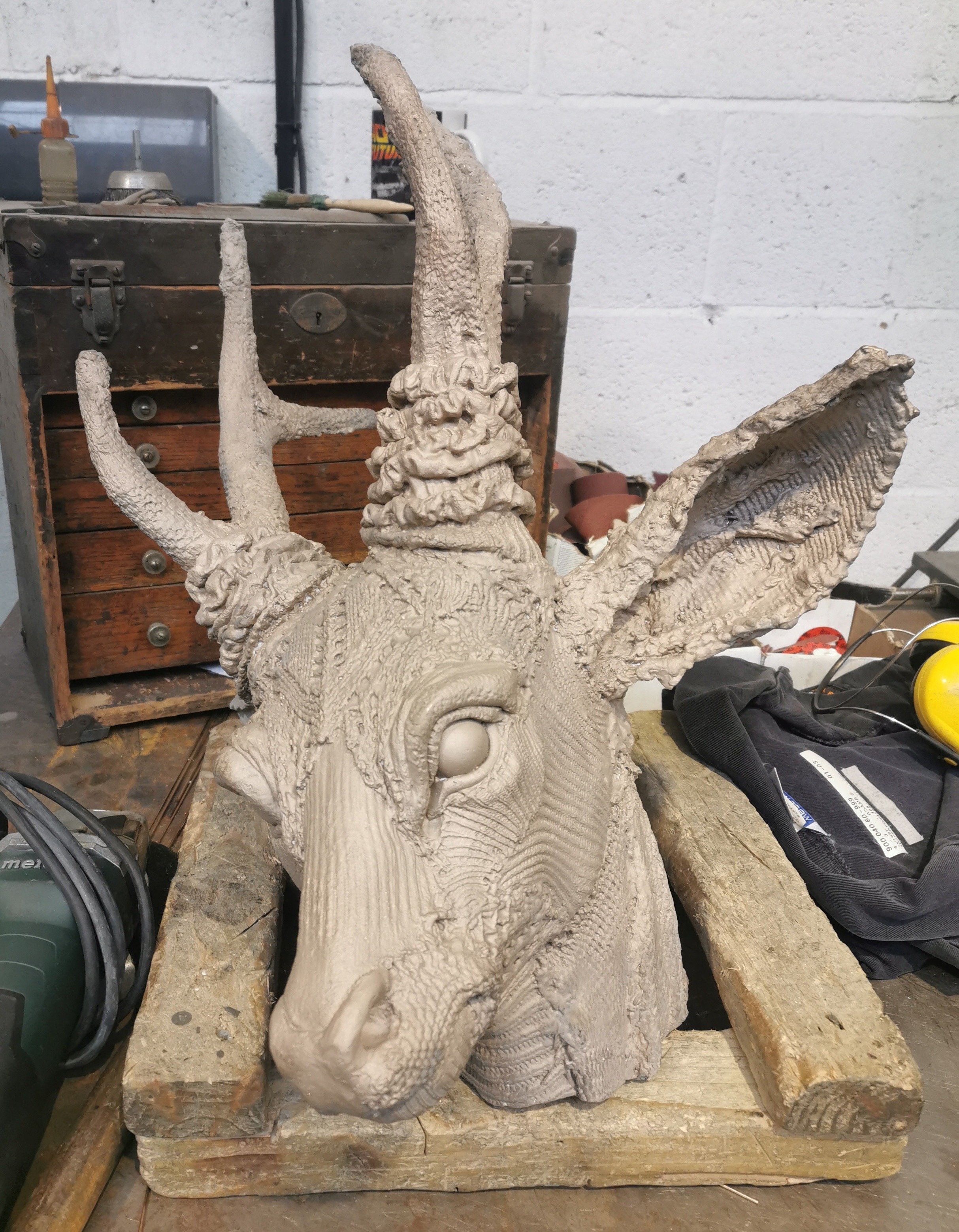
Dorcas’ sculpture centres on the gentle roe deer, an animal associated with folklore and transformation. Made from clay and familiar clothing fabrics, this richly textured sculpture will be cast in bronze using the ancient ‘lost-wax’ process. The deer will be silhouetted against the sky, appearing high up above the gateway at Trinity Road, a mysterious presence inviting you to look up.
Behind the scenes: The making of Dorcas Casey’s deer sculpture
Made from clay and familiar clothing fabrics, this richly textured sculpture will be cast in bronze using the ancient ‘lost-wax’ process.

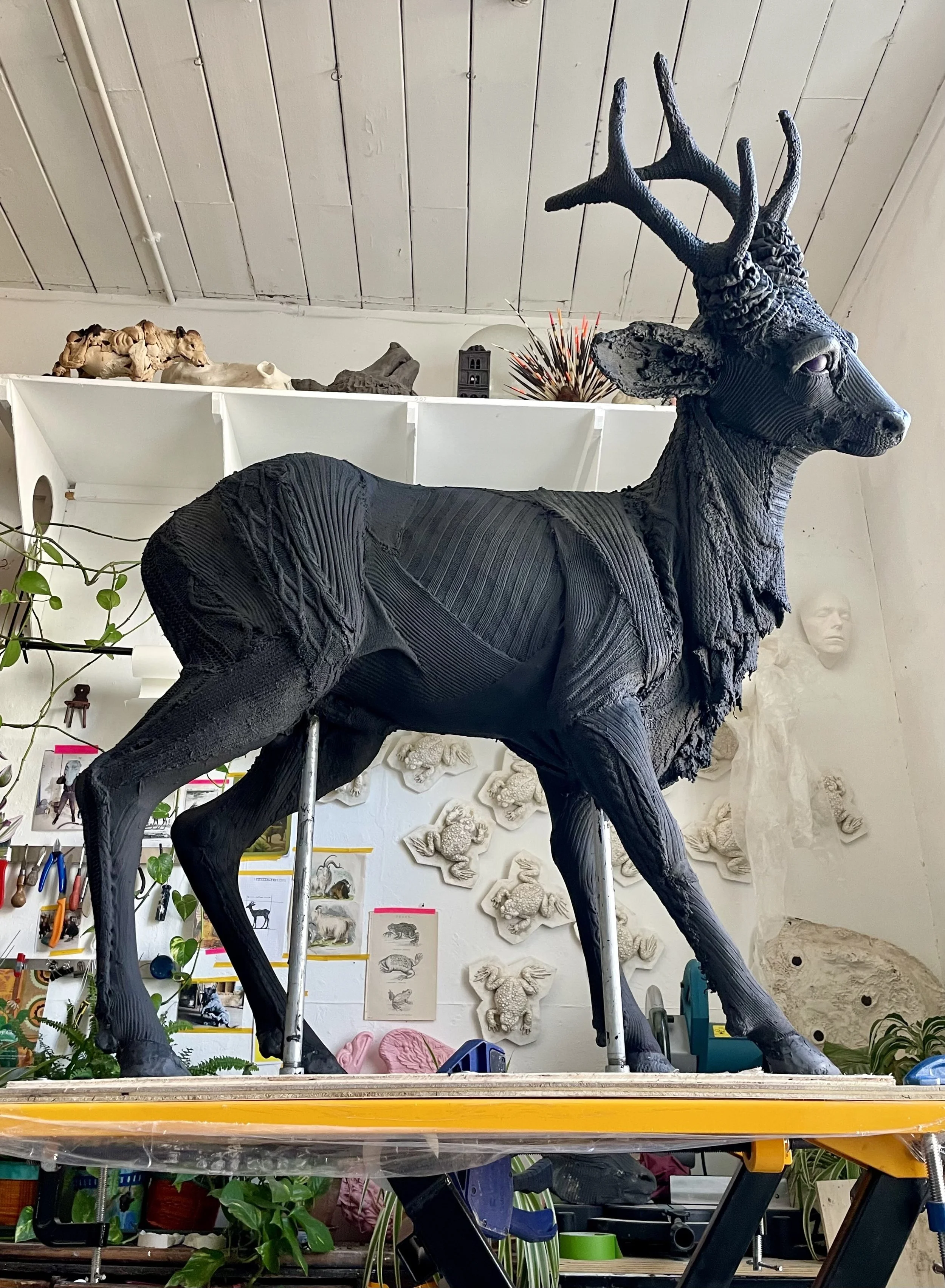
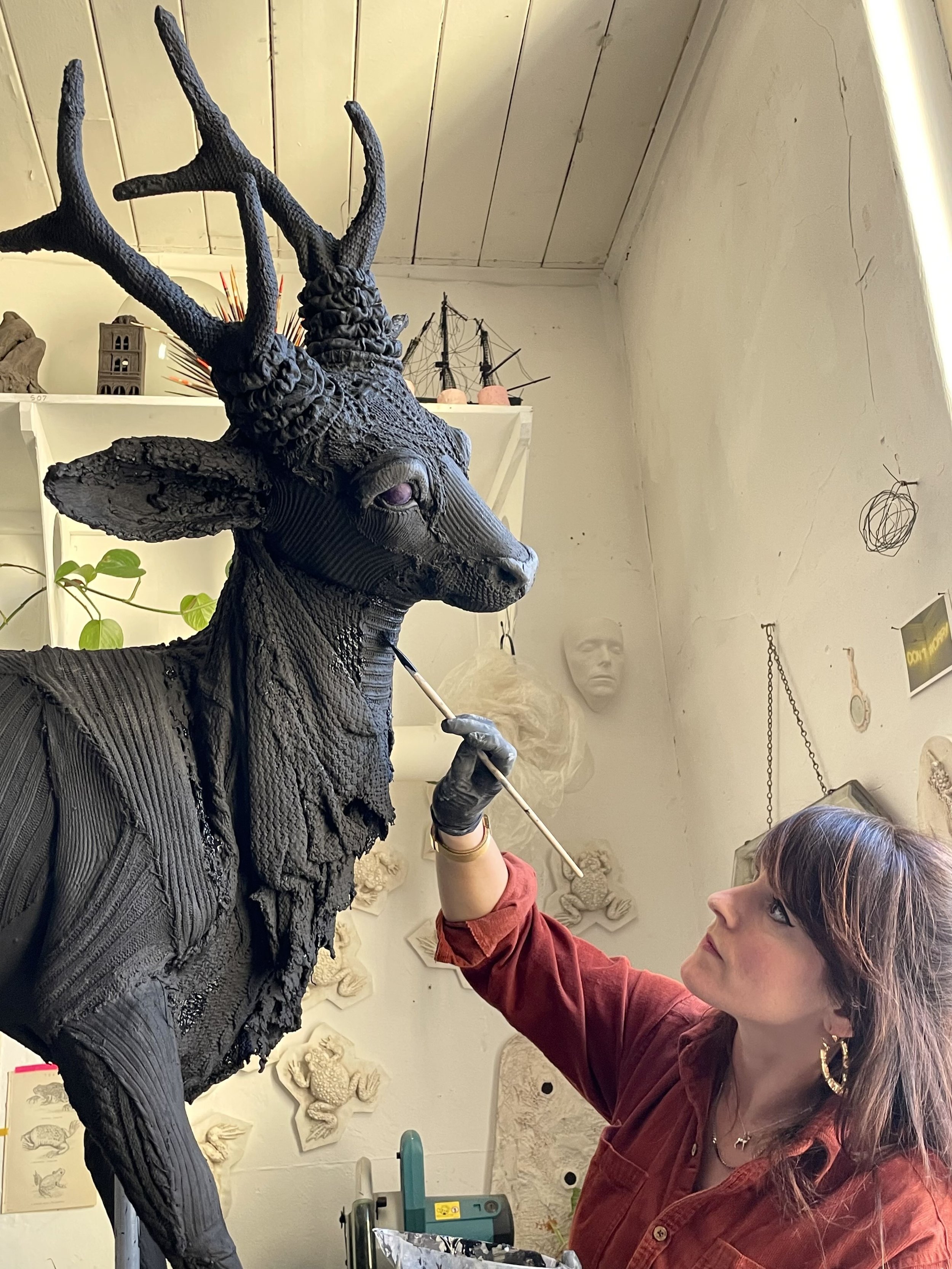

“Roe Deer are small deer often found in the margins of urban space. They are gentle and nimble and can sometimes be seen at twilight. They are increasingly finding their way further into cities, one was even spotted running through the middle of Old Market Street.”
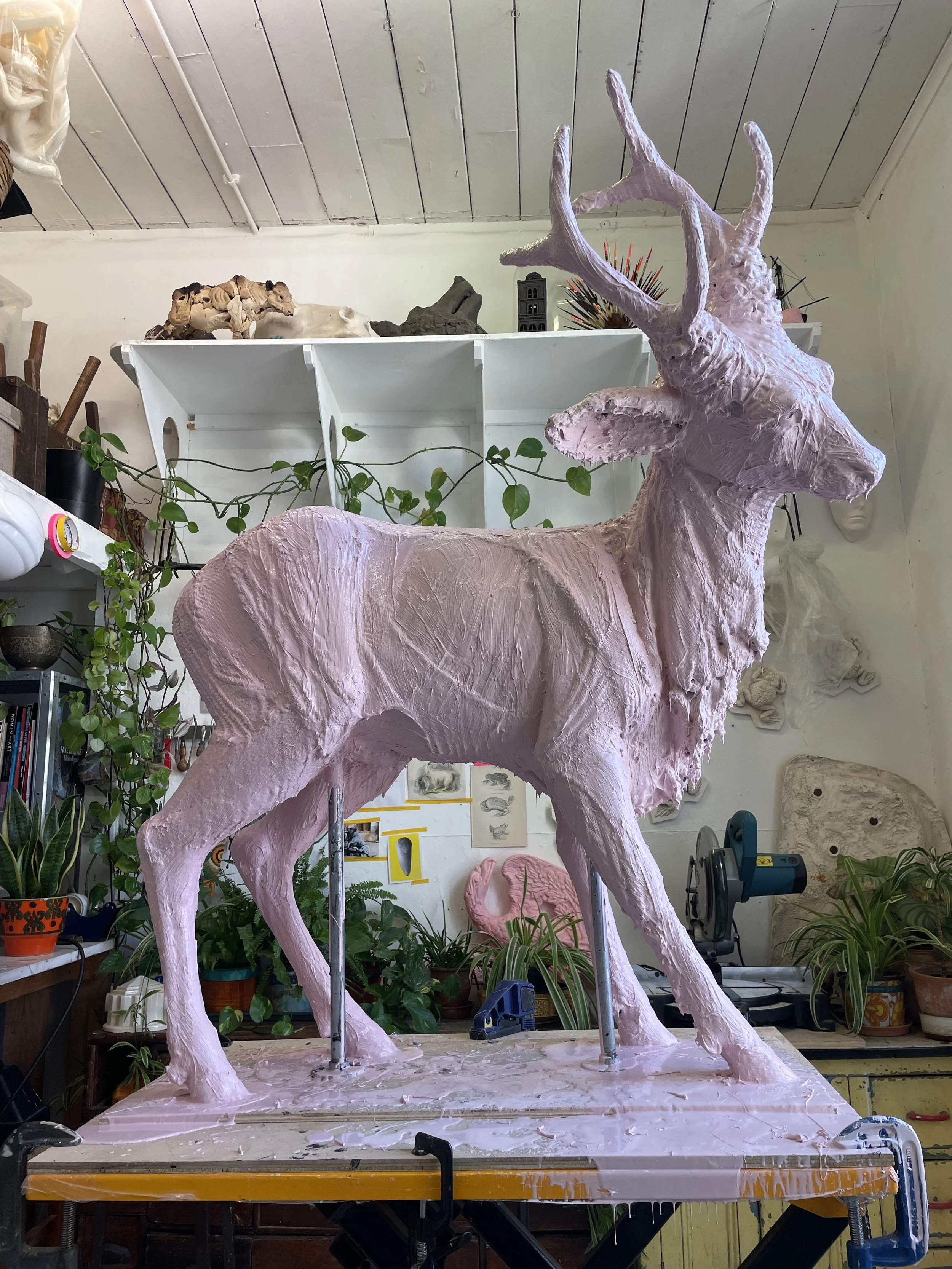
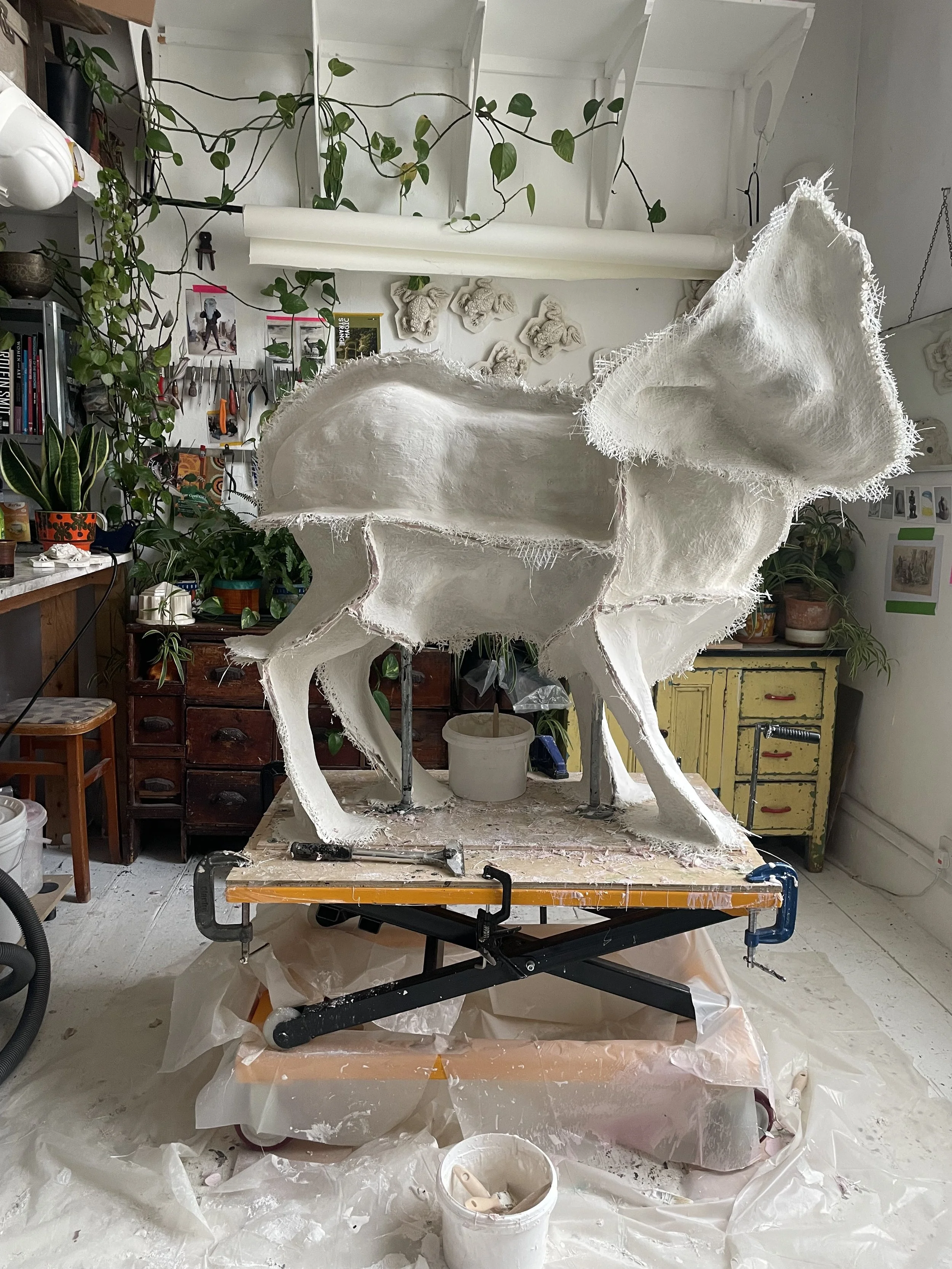
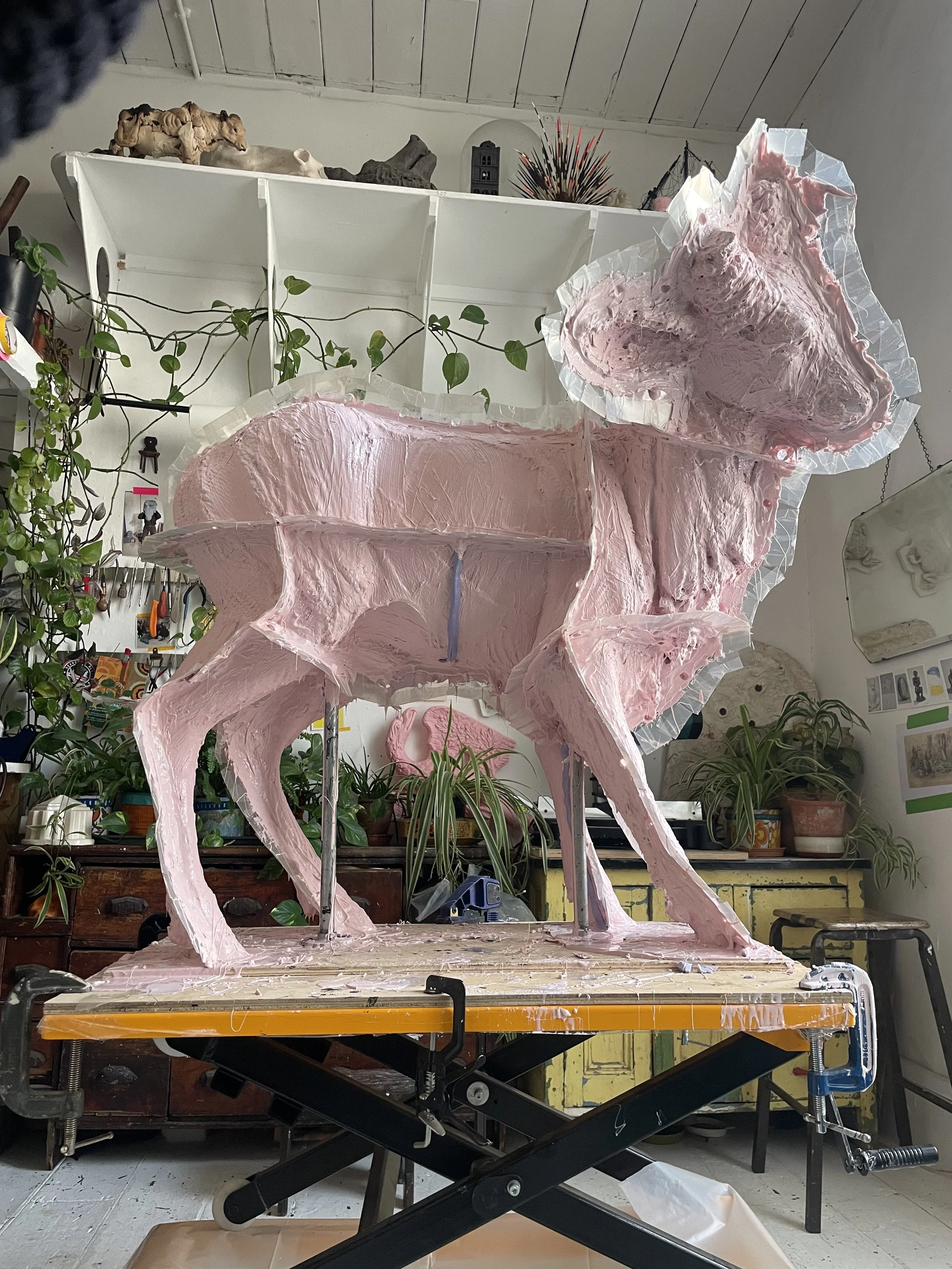
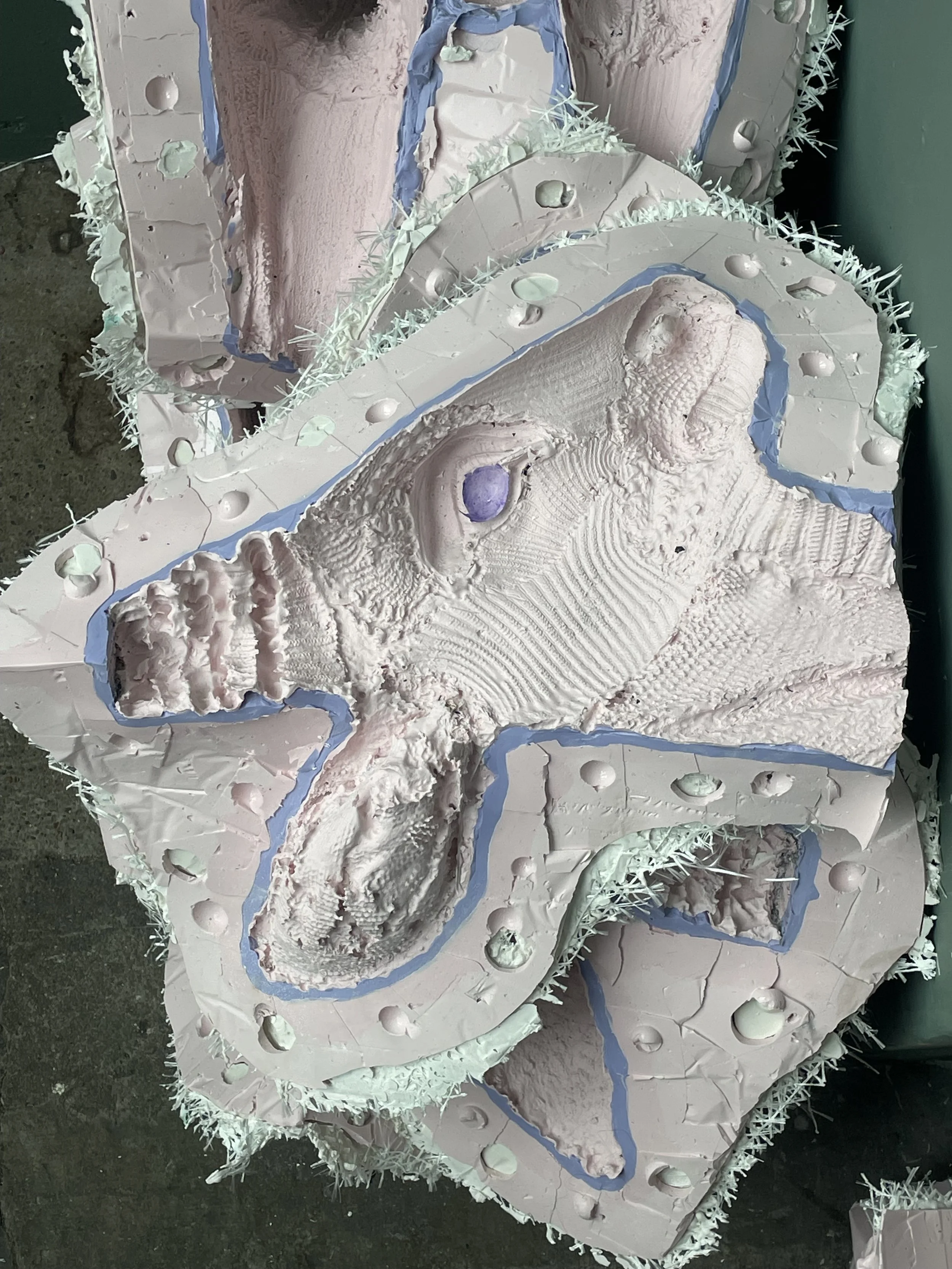
A mould is made of the deer sculpture in Dorcas’ studio at Jamaica Street Studios, Bristol, with the team from Castle Fine Arts Foundry in Stroud. Layers of pink silicone are brushed on in layers to capture all the surface detail, followed by white jesmonite which makes a rigid supportive casing to record the form. Once set, the mould is separated into sections and transported to the foundry, where it will be used to produce a wax version of the sculpture.
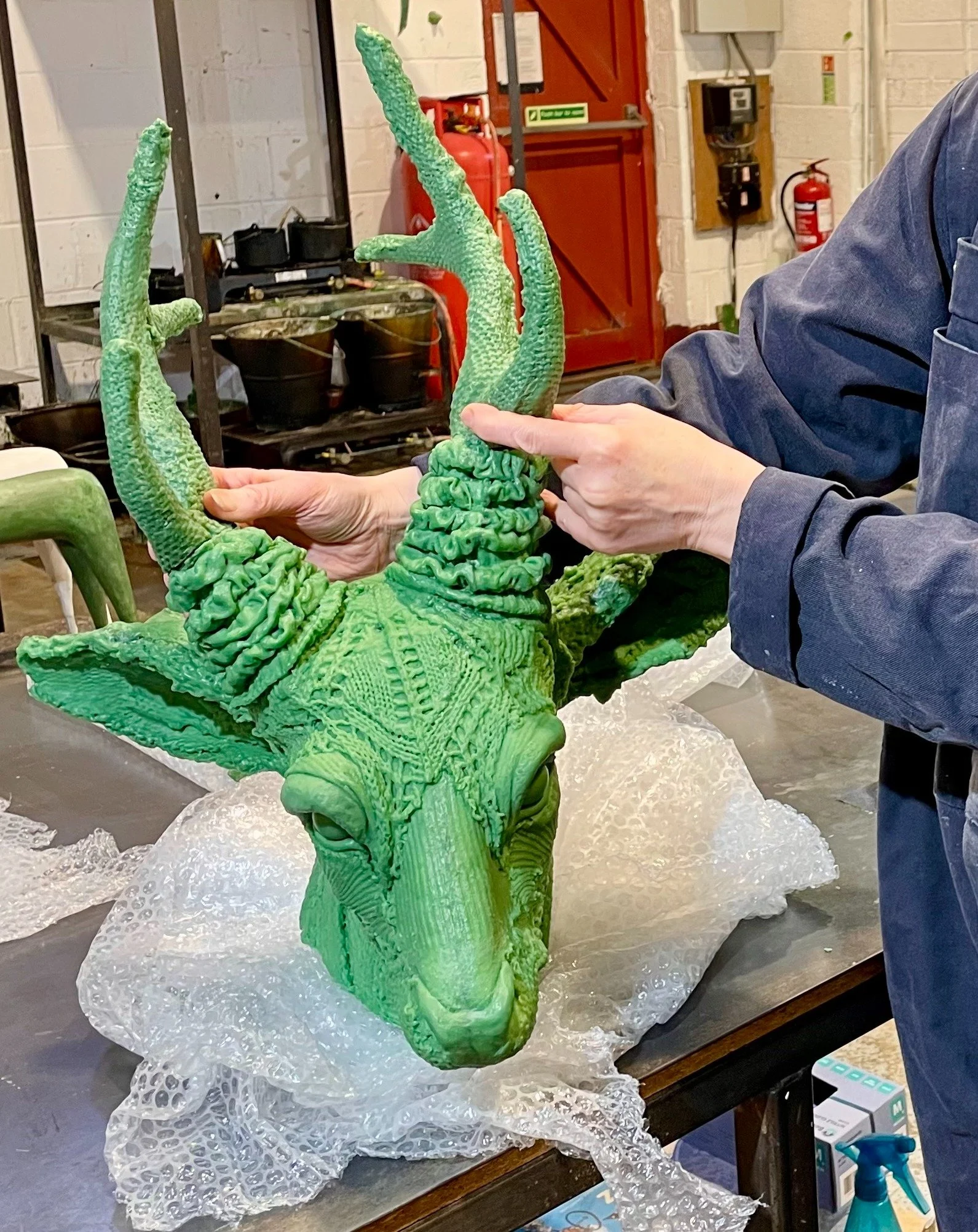
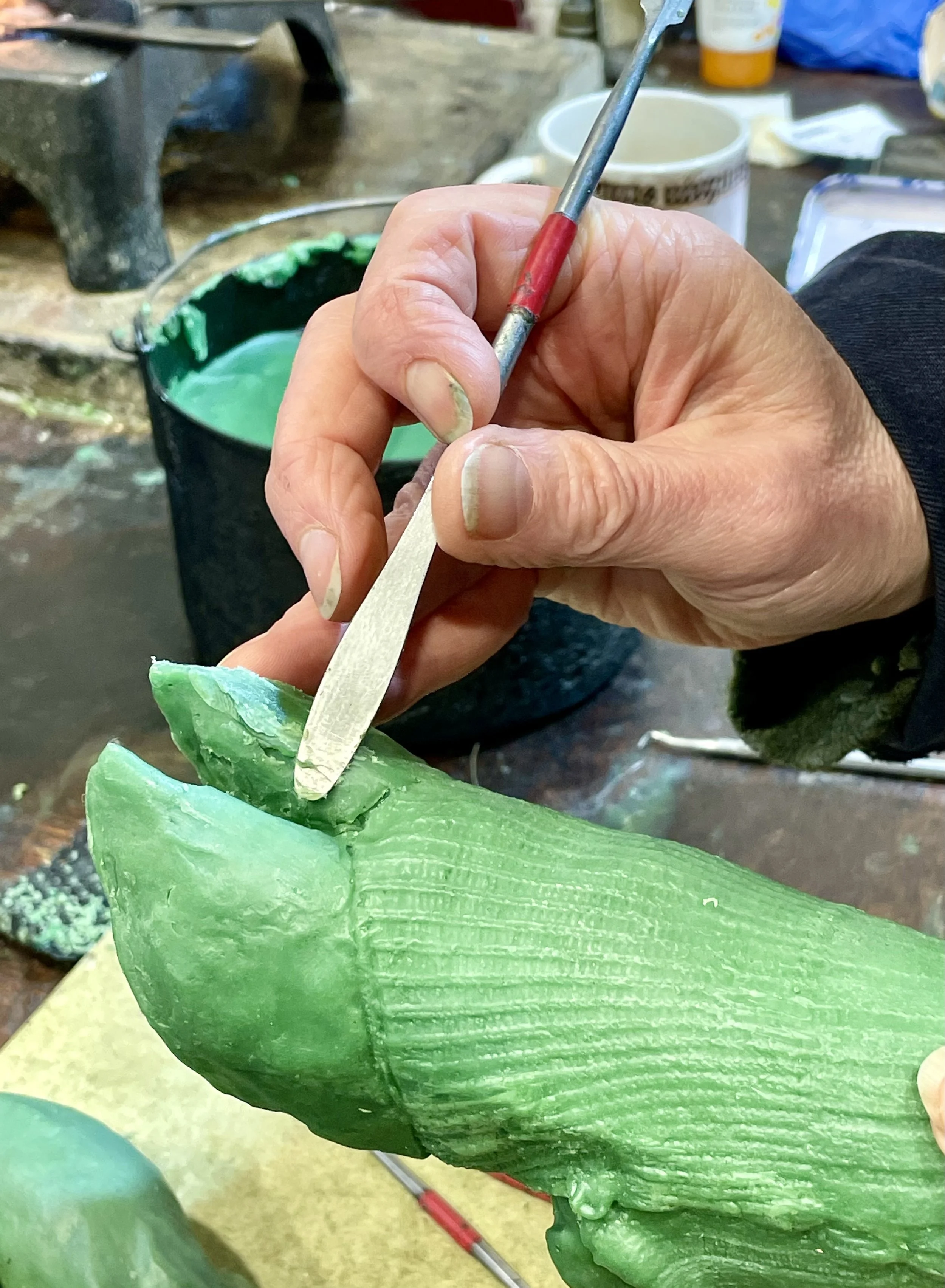
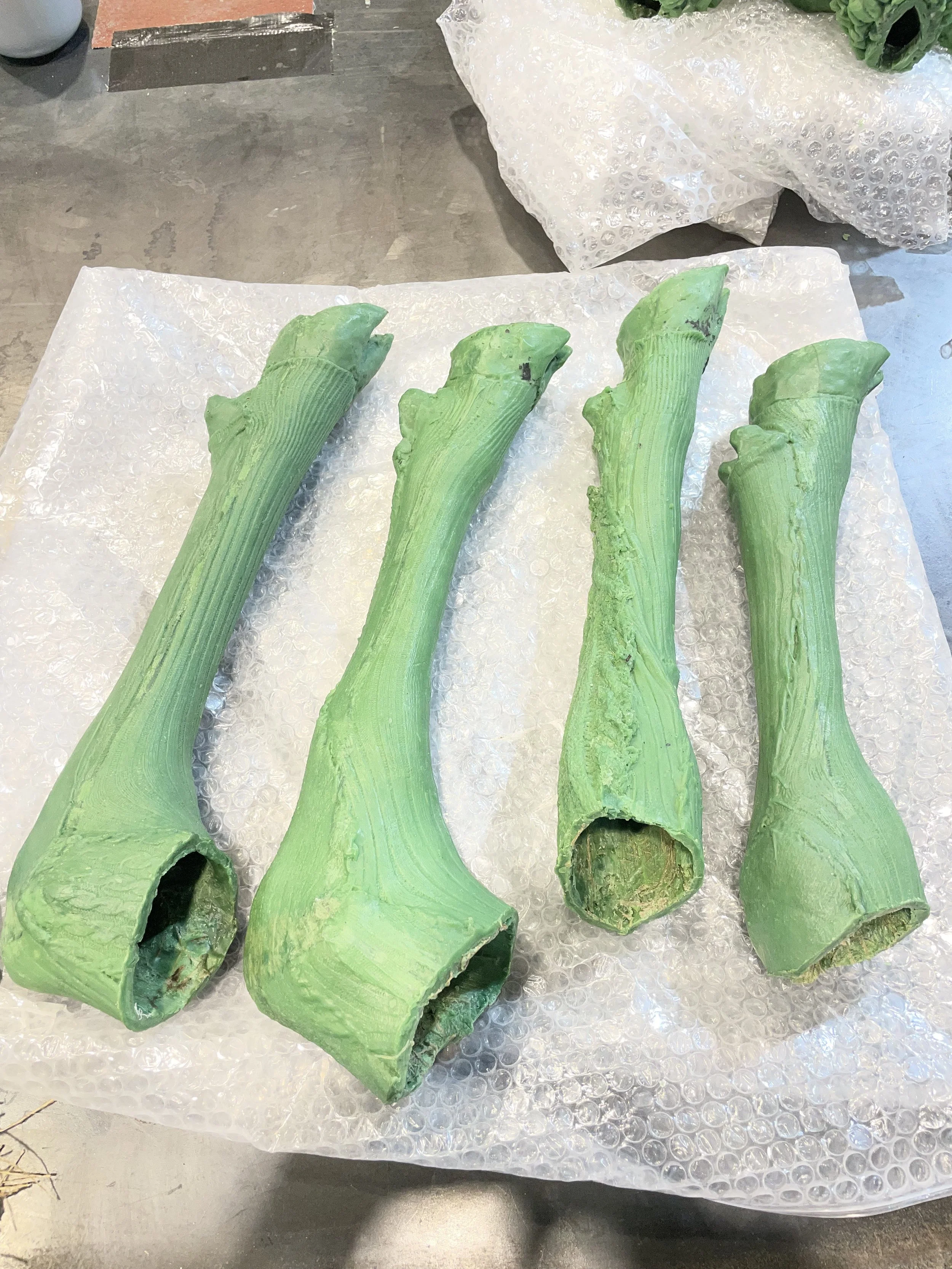
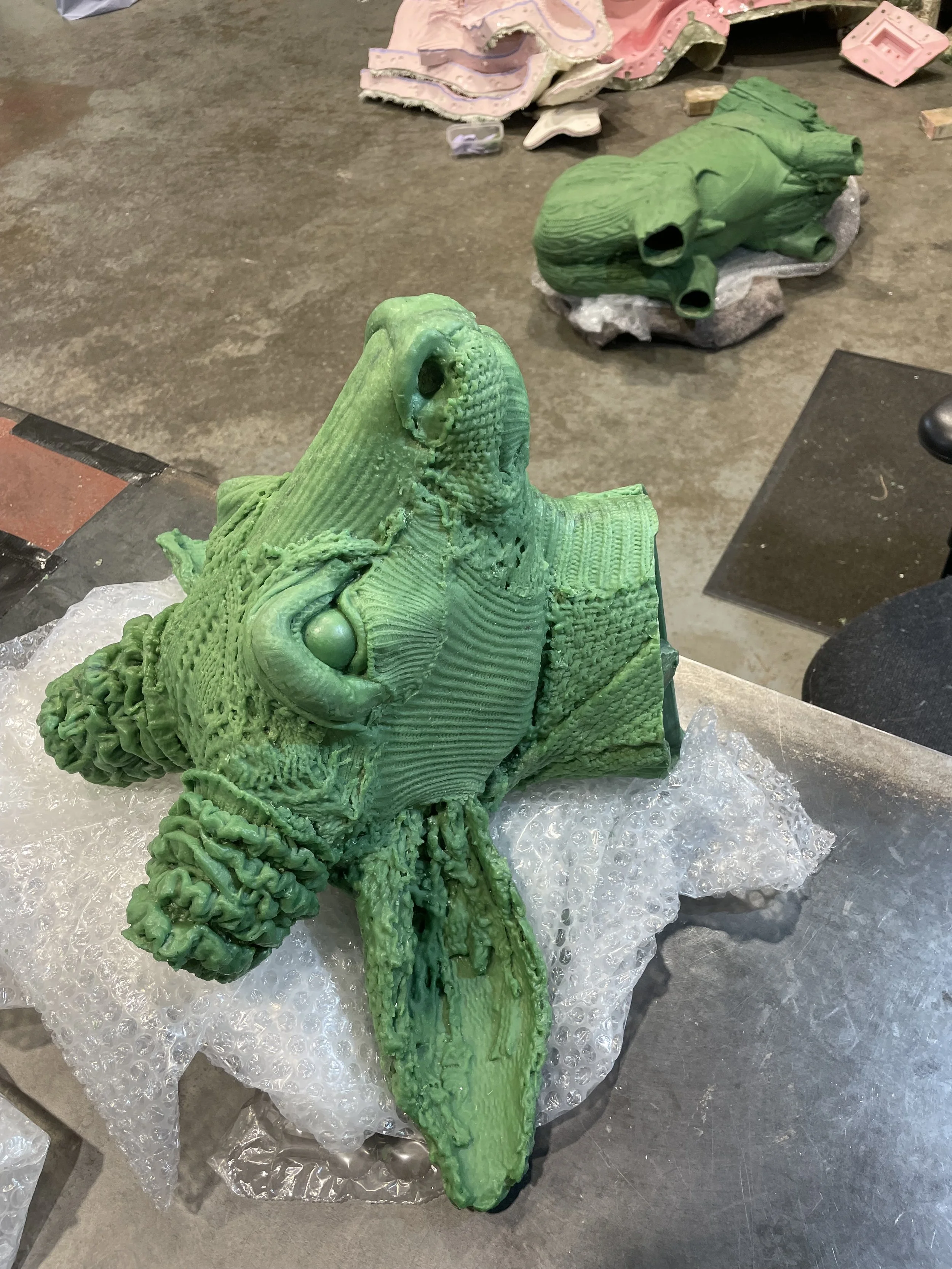
In the wax working rooms at Castle Fine Arts Foundry, a hollow wax version of Dorcas Casey deer sculpture is created. Green molten wax, painted in layers, builds up the form. A system of wax funnels and channels is then added, to guide the bronze into the mould during casting. Layers of ceramic ‘shell’ are built up around the wax to form a new mould, then the wax is melted out ready for the bronze pour. This is the ancient lost-wax bronze-casting process
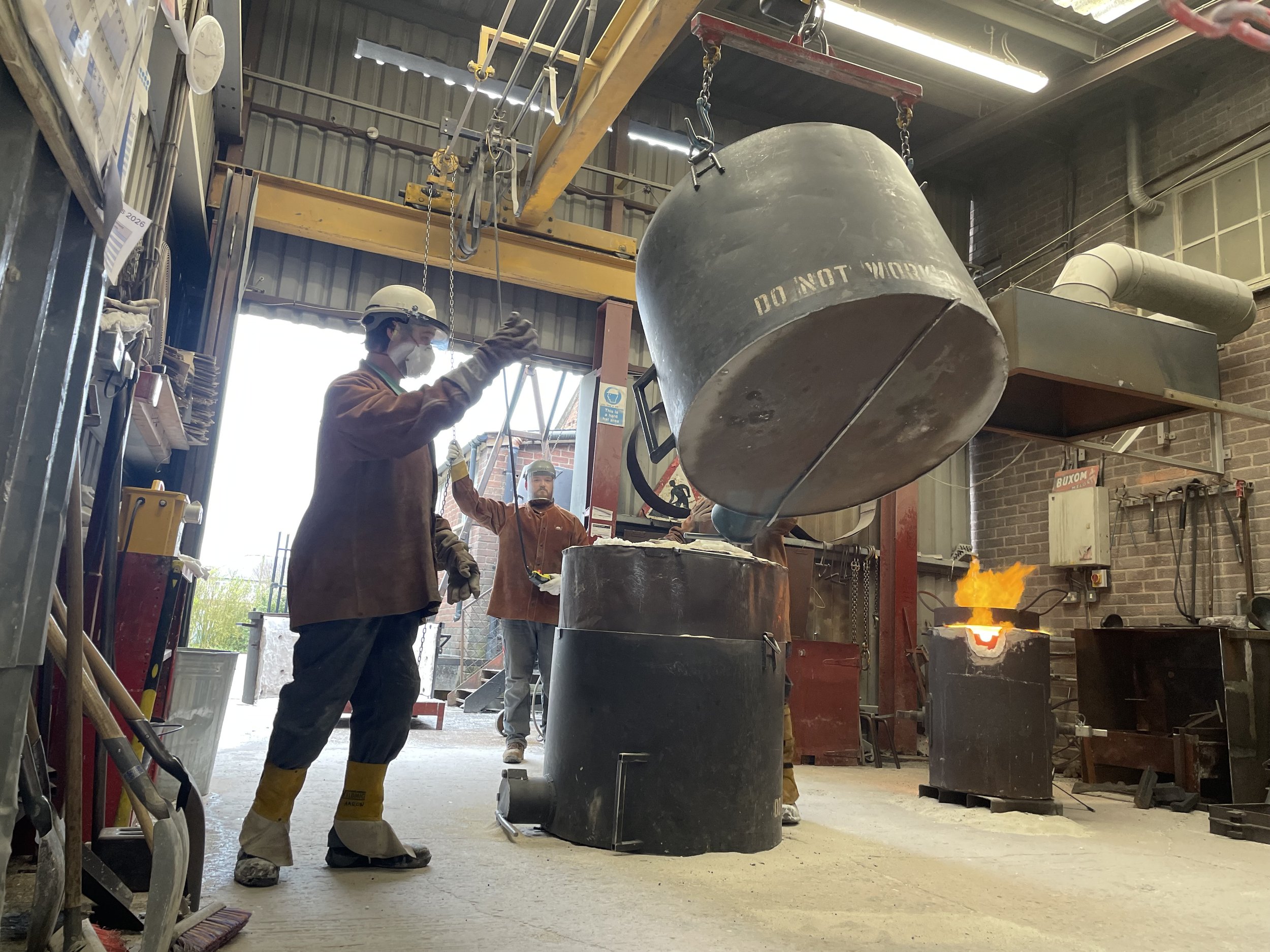
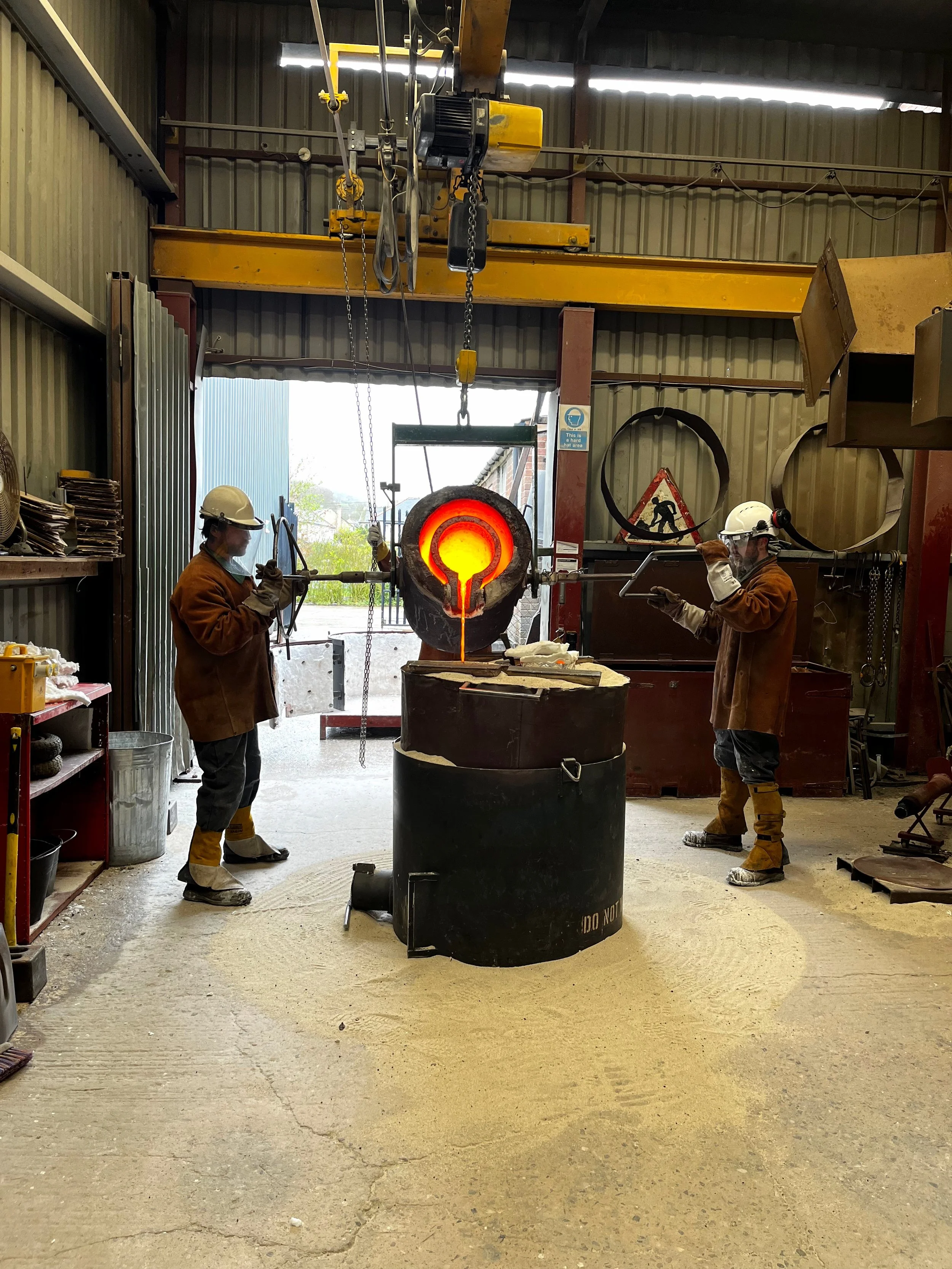
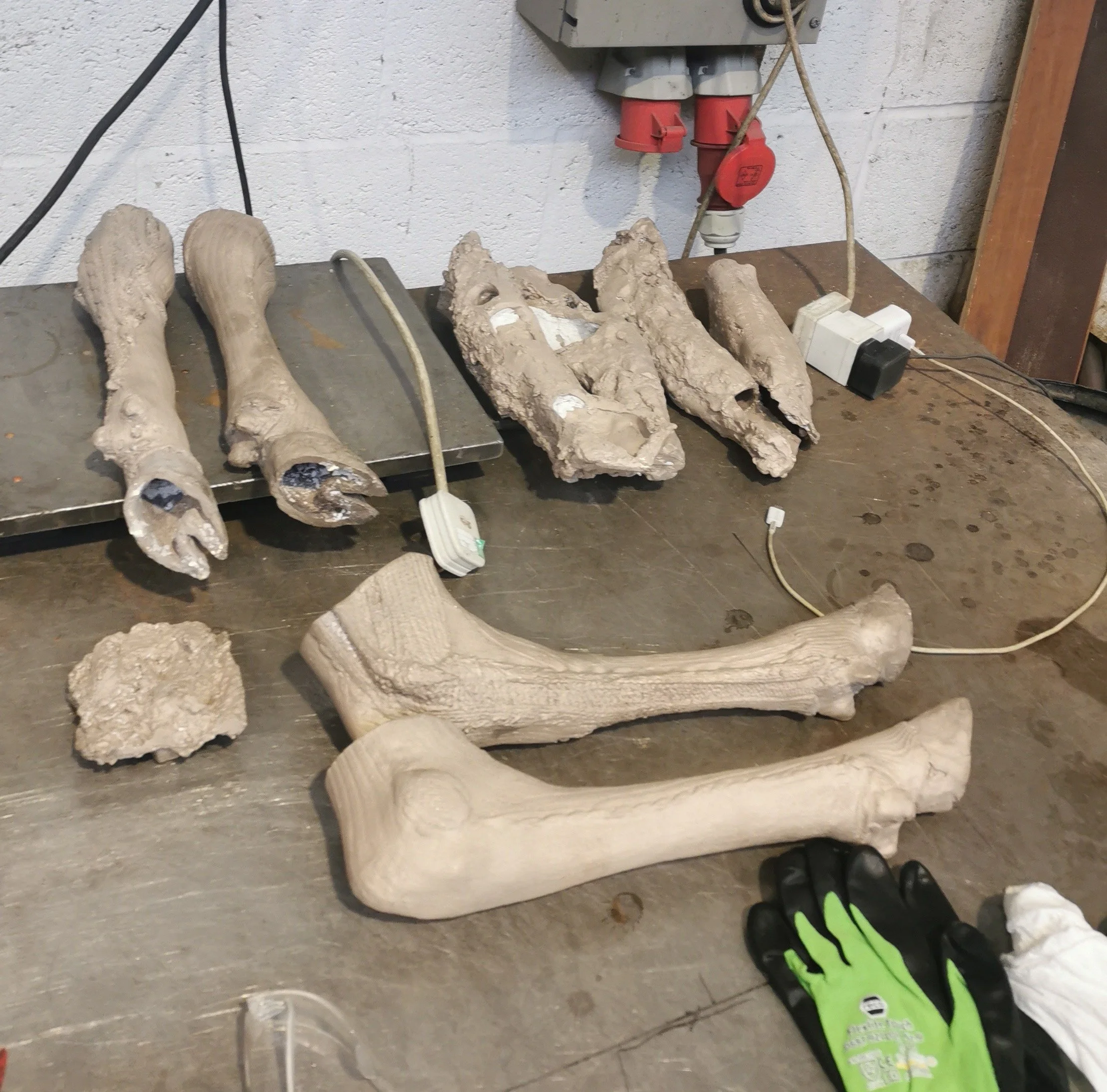
Back at Castle Fine Arts Foundry, the ceramic moulds are heated and prepared for the pour, supported in ceramic sand. The bronze is melted in a crucible and then poured with total concentration. After a few hours, it cools and sets. The brittle ceramic shell is then broken away with sledgehammers, revealing the cast within. Every surface detail from Dorcas’ original clay modelling and the textures of fabrics and other diverse materials are carried through into the final piece.
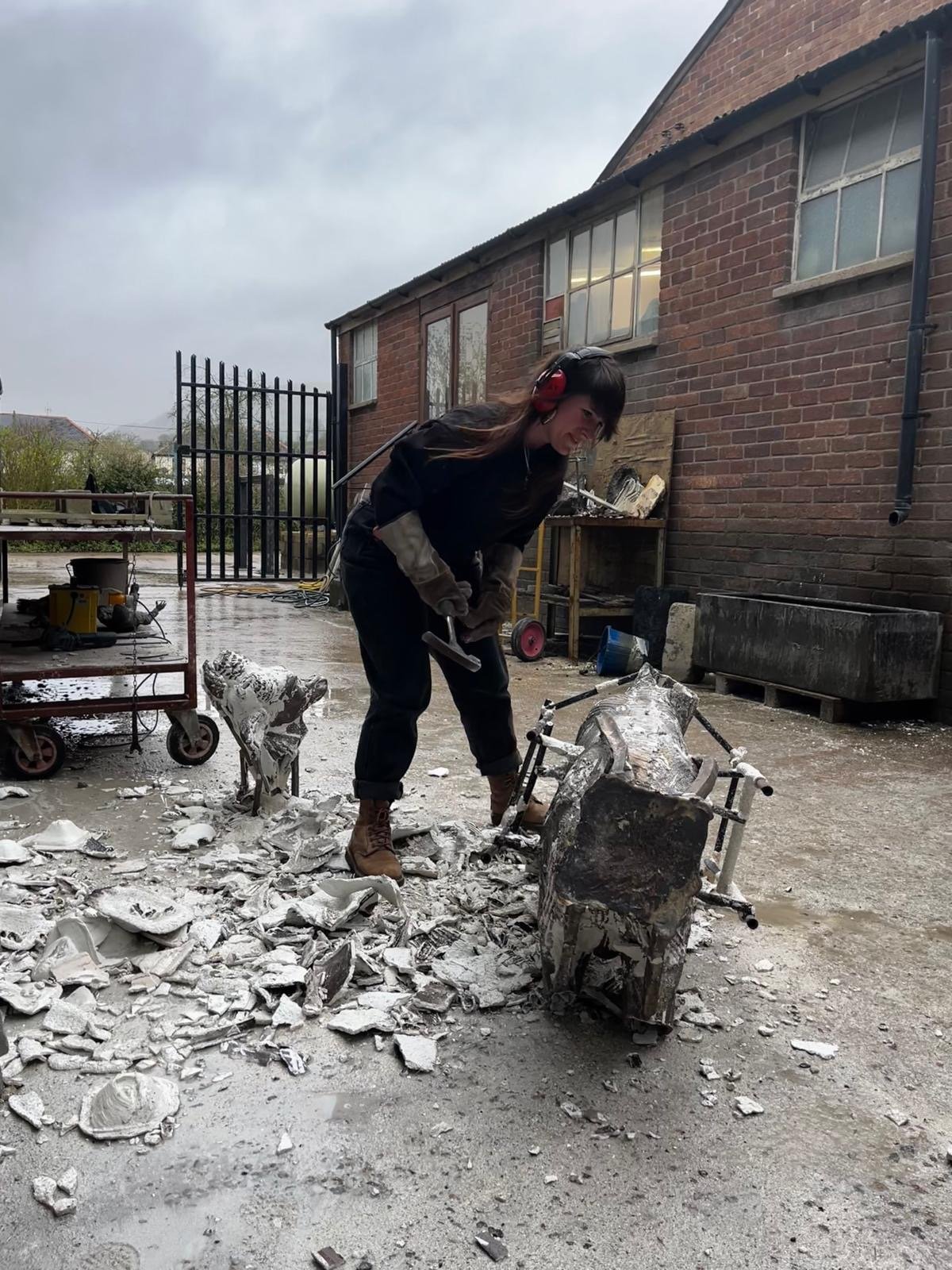
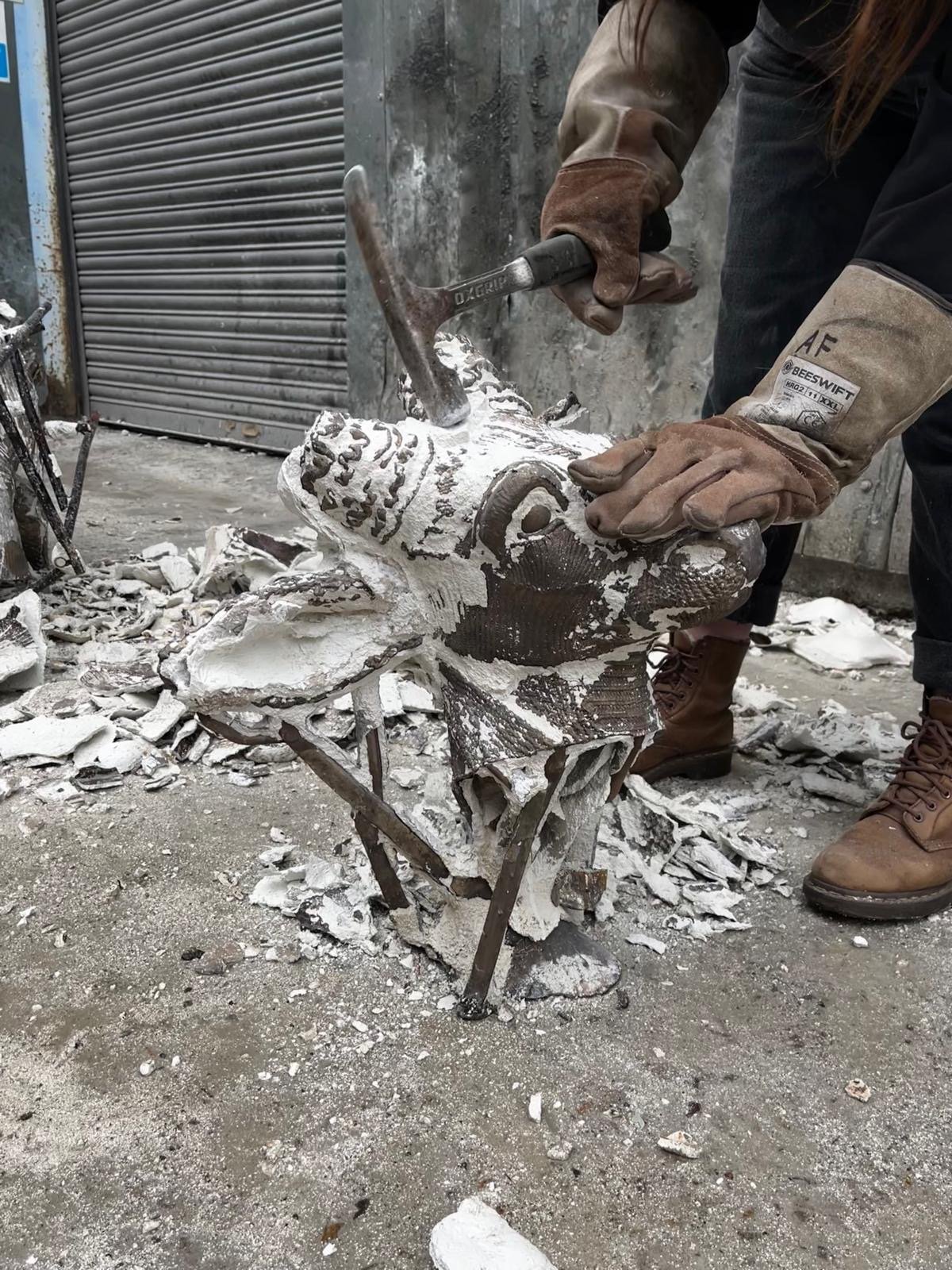
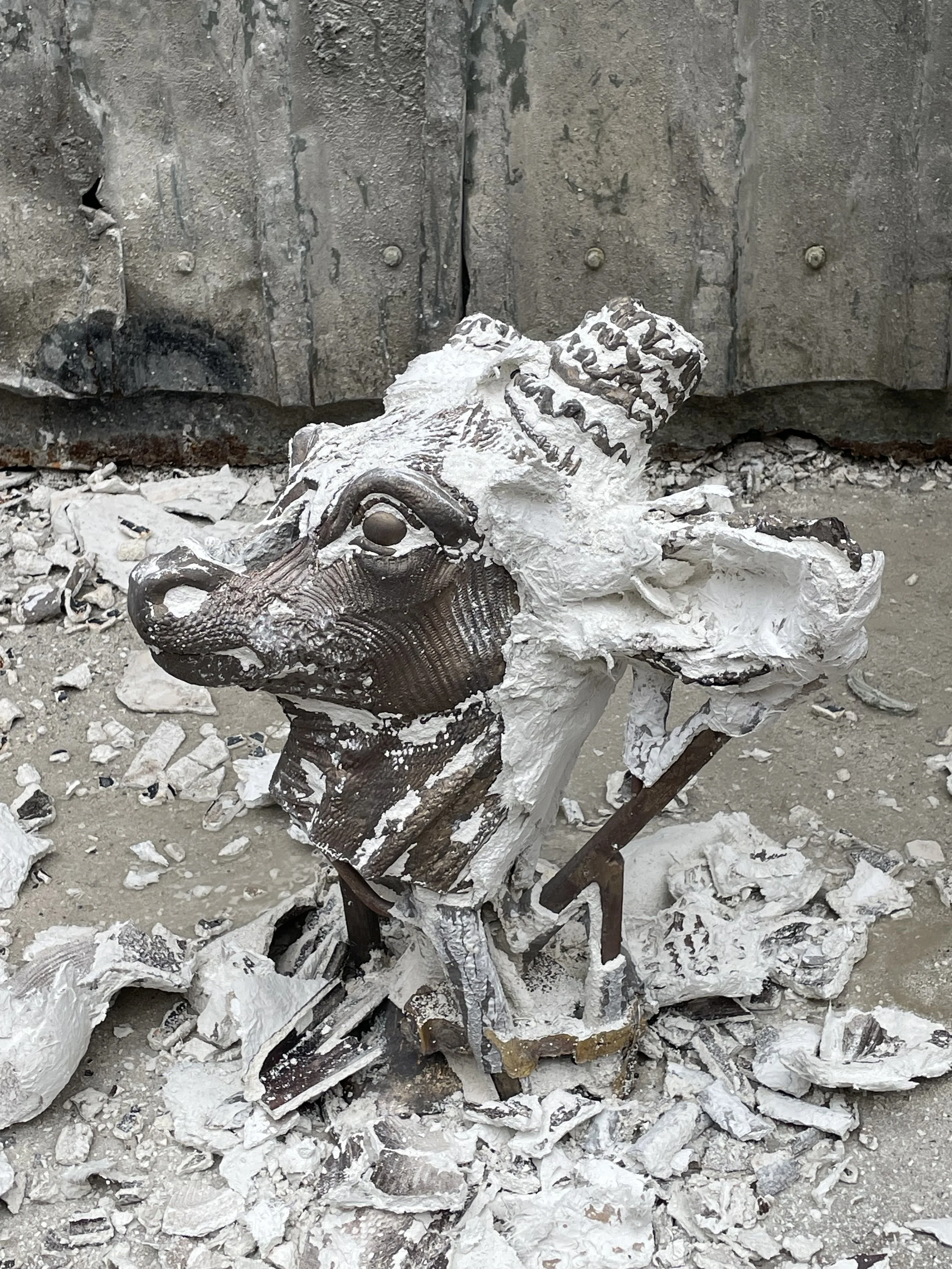
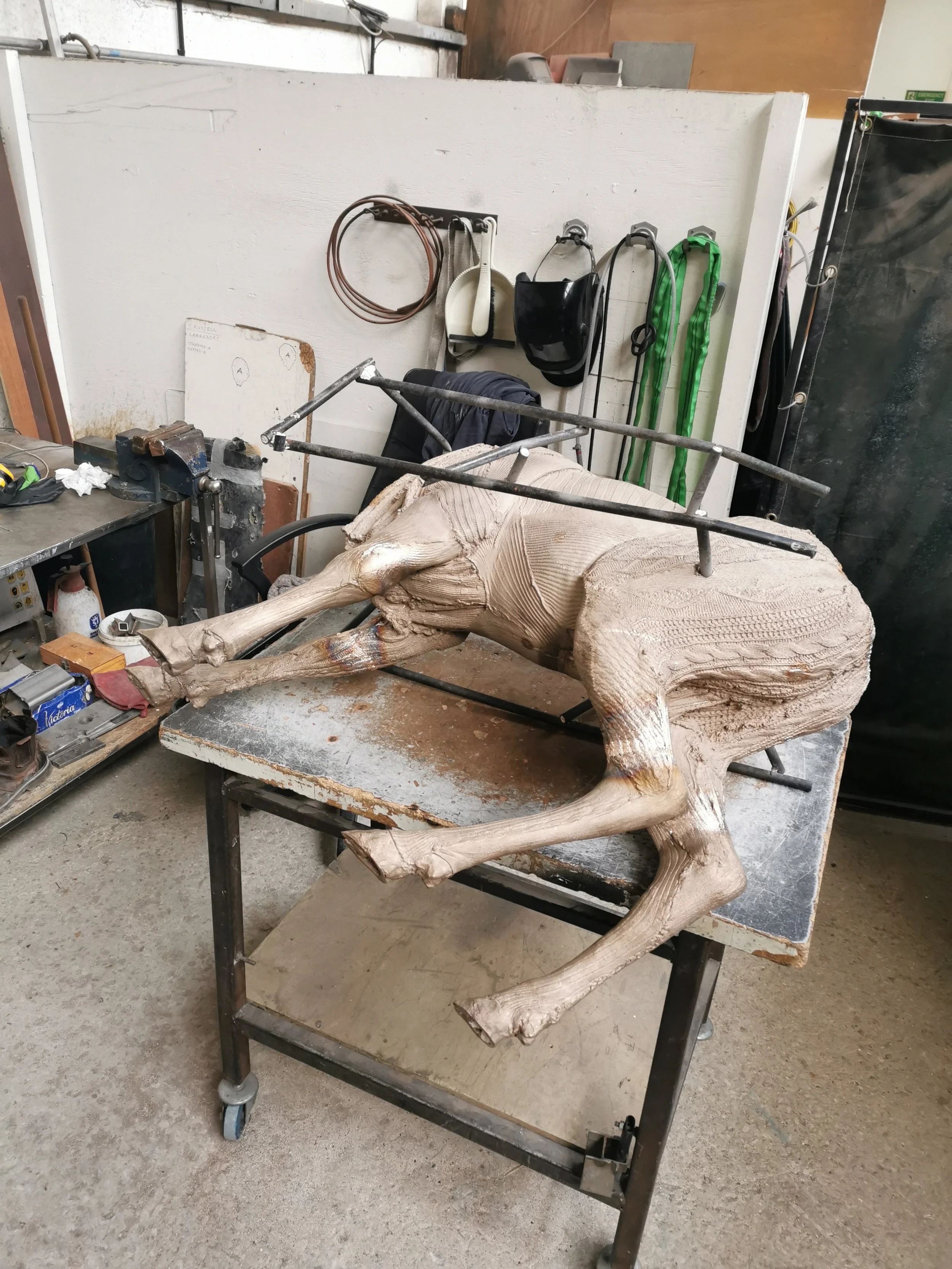
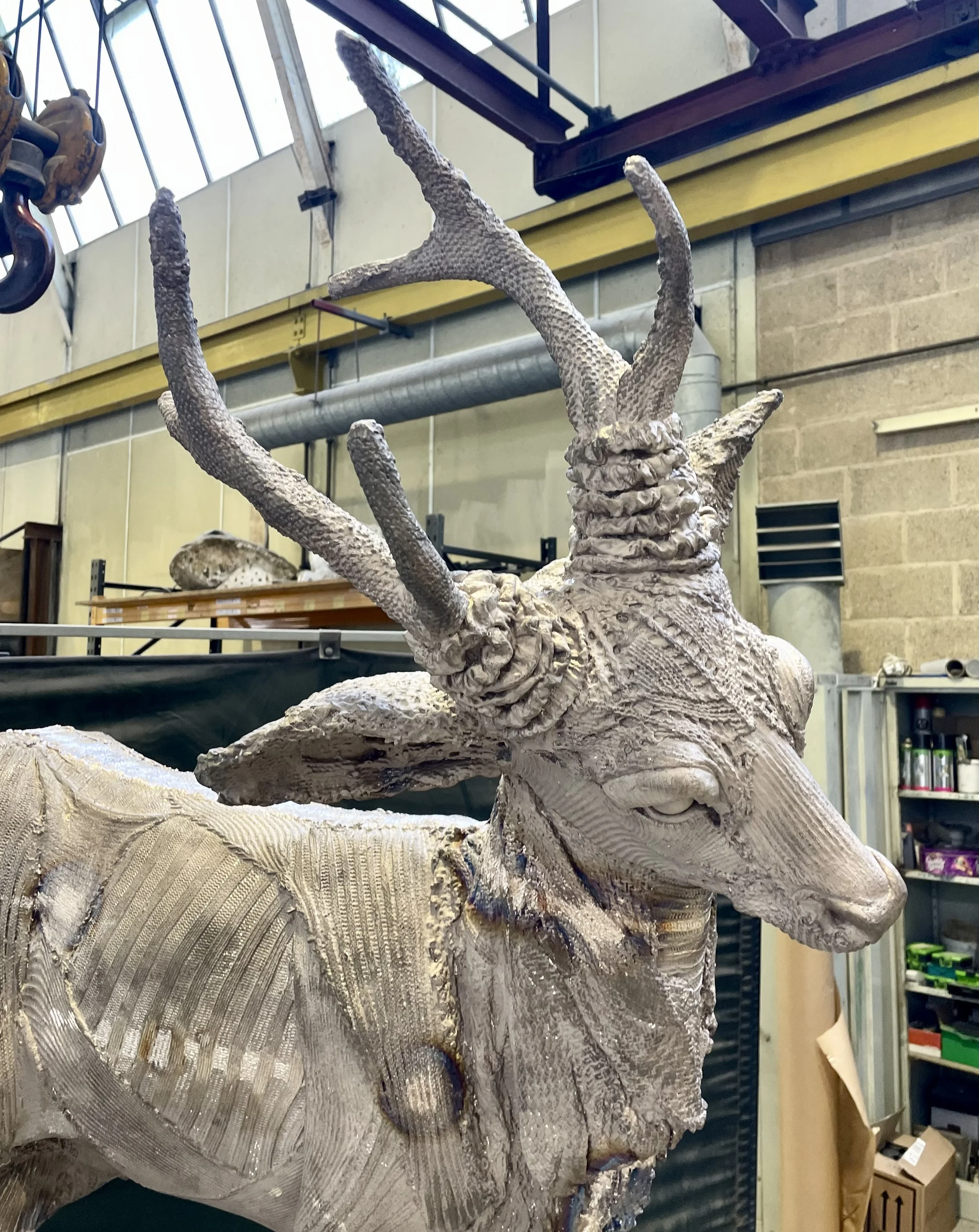
The next stage in the foundry process sees the cast bronze sections of Dorcas Casey's deer sculpture skillfully welded together by the technicians at Castle Fine Arts Foundry.
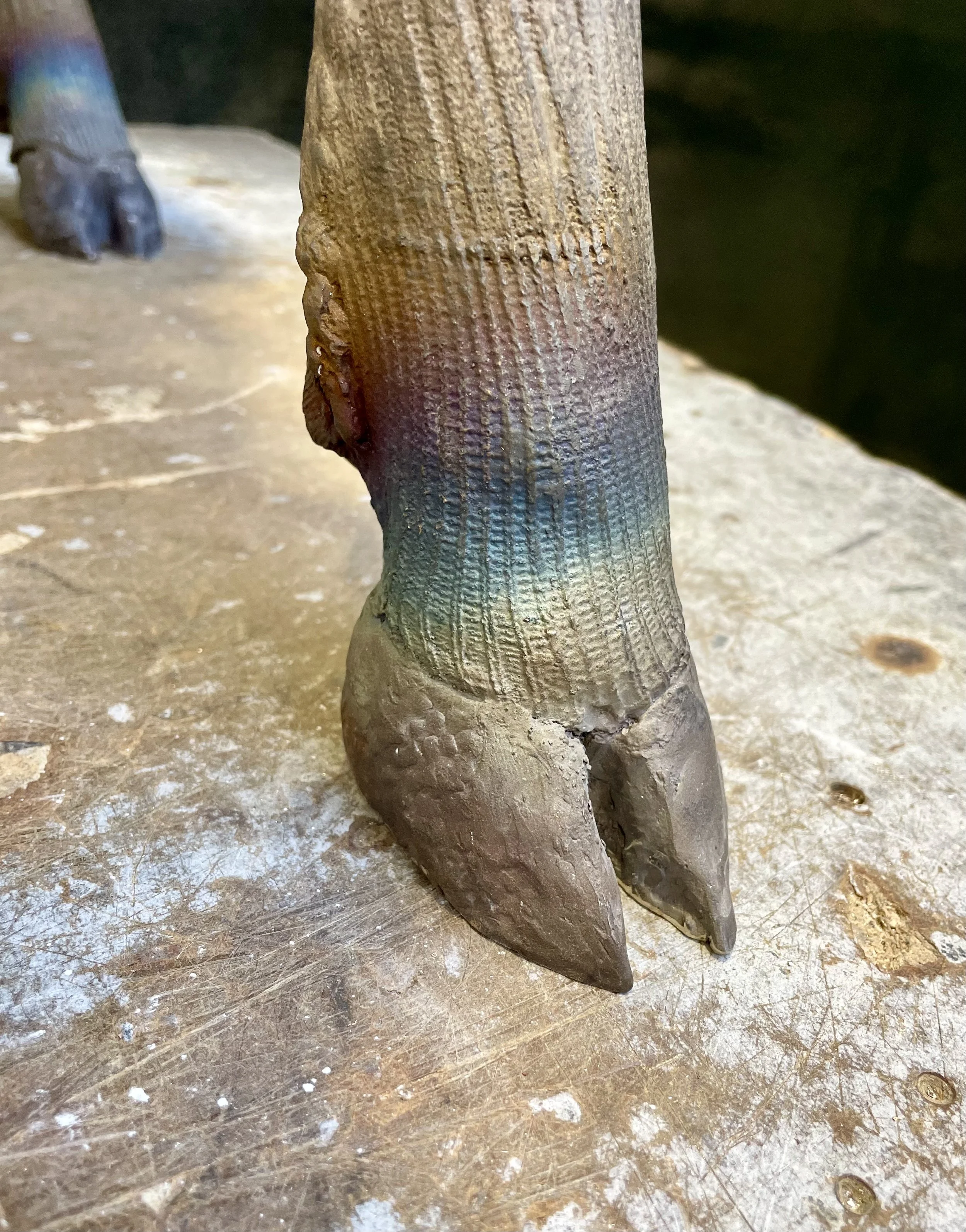
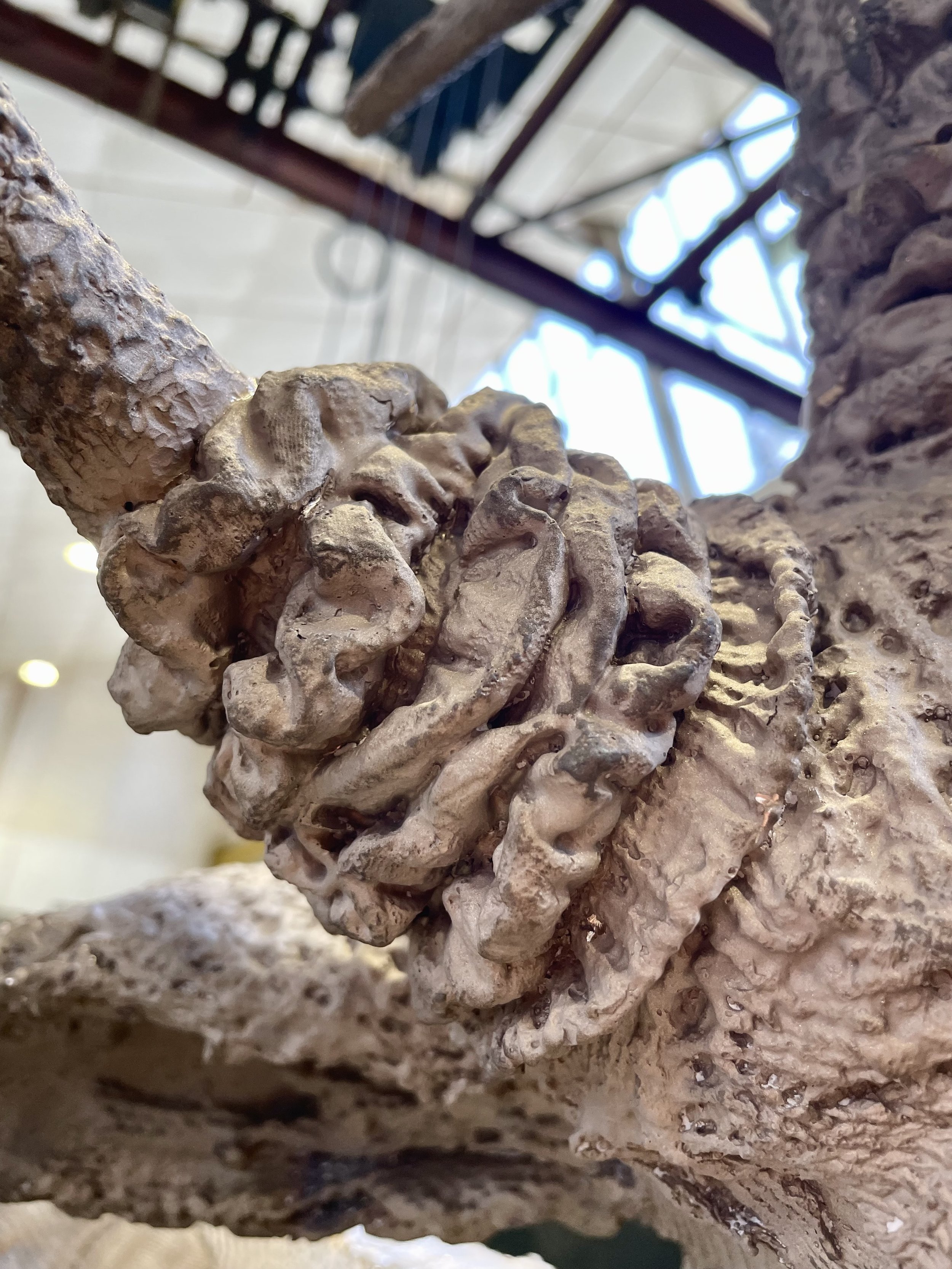
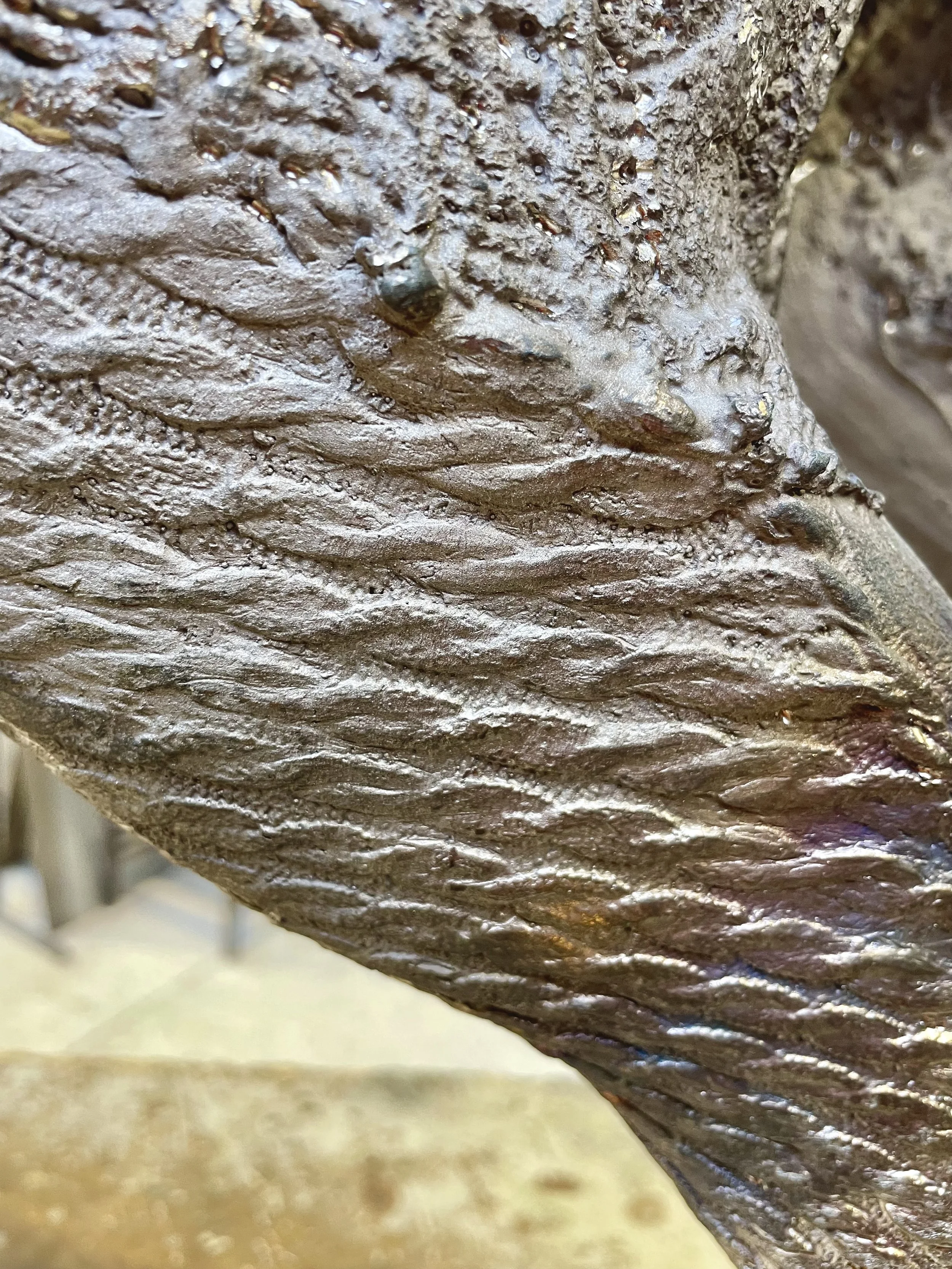
Sandblasting removes the final traces of the ceramic shell, and every join is meticulously worked back into the surface, restoring the fabric textures and details from Dorcas' original sculpture. The heat of the welding leaves fleeting rainbow colours across the bronze. The deer is now ready for the final stage of the process, where a patina will be applied to the surface.
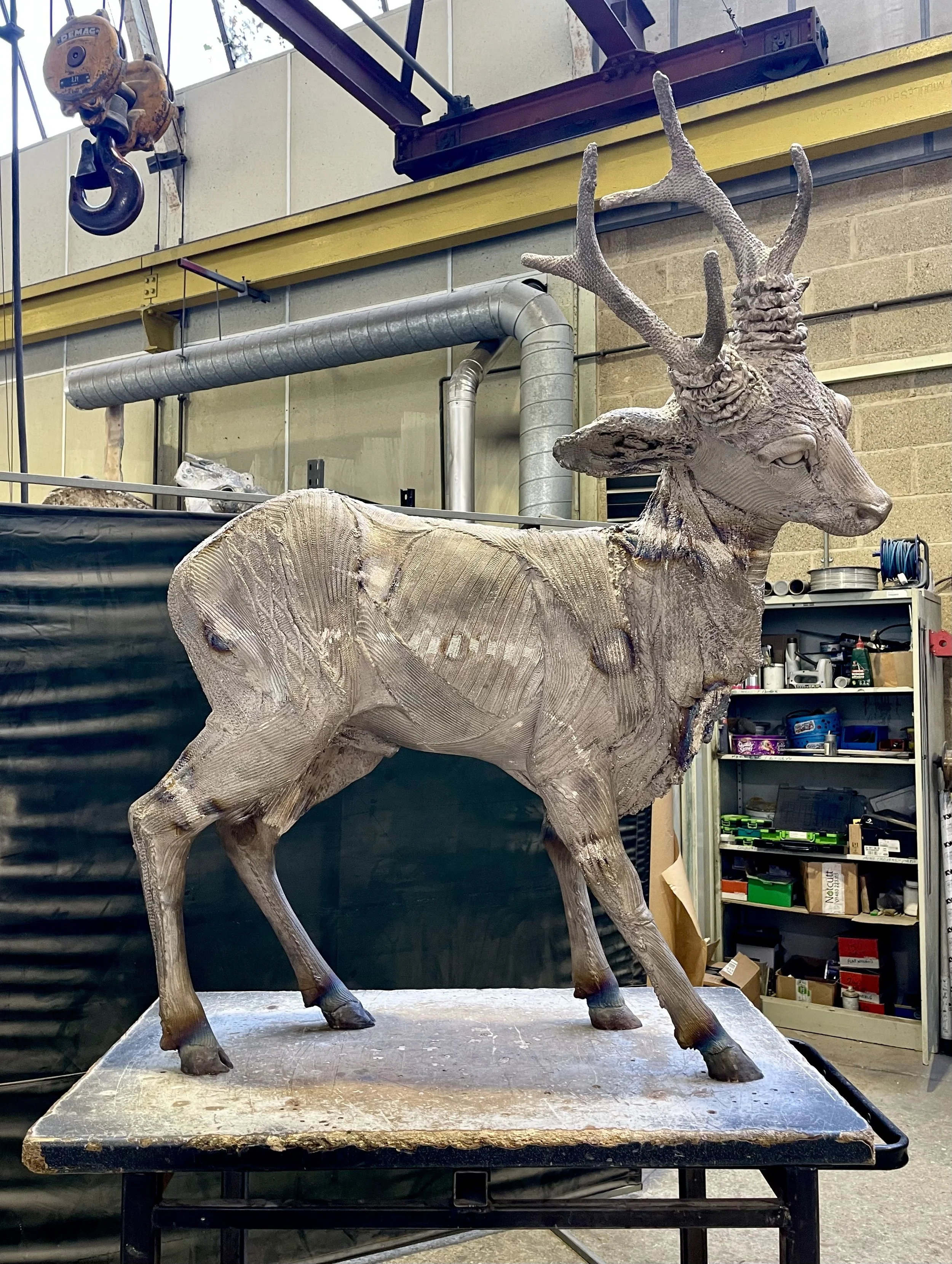
Look out for the final reveal of Dorcas Casey’s sculpture in autumn 2026.
Produced by Ginkgo Projects as part of a new residential development on Trinity Road, delivered by The Guinness Partnership.
Follow @DorcasCasey and @GinkgoProjects on Instagram for the latest updates on the sculpture for Trinity Road.
About the artist
Dorcas Casey is a multi-disciplinary artist based in Bristol. She is interested in dreams, intuition, folk rituals, memory and stories. She works with many different materials including fabric, plaster, bronze, and ceramics. Dorcas studied Sculpture at Winchester School of Art and completed a Masters in Multidisciplinary Printmaking at UWE. She is an Academician at the RWA and has a studio in Jamaica Street Studios in Stokes Croft. She makes processions and sculptures for Glastonbury Festival and exhibited her fabric sculptures at Banksy’s Dismaland. She was nominated to work as lead artist for Artichoke’s PROCESSIONS in 2018 and awarded a QEST Scholarship to study bronze-casting. Dorcas won the ACS Studio Prize in 2021 and in 2022 she was resident artist at Guldagergaard International Ceramics Research Centre in Denmark supported by the British Ceramics Biennial. Dorcas has been nominated for the 2026 PSSA Marsh award for excellence in public sculpture.